Fire safety is a critical responsibility for every business owner. Whether you operate a warehouse in Nashville, a retail store in Knoxville, a manufacturing facility in Chattanooga, or an office building anywhere in Tennessee, understanding your fire risks is essential for protecting employees, customers, property, and business operations.
The need for proactive fire safety planning has never been greater. According to the National Fire Protection Association (NFPA), an estimated 1.388 million fires occurred in the United States in 2024, resulting in approximately 3,920 civilian deaths and $19 billion in property damage. As businesses face evolving fire hazards—including lithium-ion battery storage, increased electrical demands, and changing code requirements—regular fire risk assessments have become a key component of business continuity and compliance.
This guide explains how Tennessee businesses can conduct an effective fire risk assessment and reduce the likelihood of costly fire-related incidents.
What Is a Fire Risk Assessment?
A fire risk assessment is a systematic evaluation of a workplace to identify fire hazards, determine who may be at risk, assess existing fire protection measures, and implement actions to reduce or eliminate potential dangers.
The purpose of a fire risk assessment is to answer three critical questions:
- What could cause a fire?
- Who could be harmed if a fire occurs?
- What steps can be taken to prevent or minimize the risk?
A properly conducted assessment helps businesses improve safety, maintain compliance, and prepare for emergencies before they happen.
Why Fire Risk Assessments Matter for Tennessee Businesses
Fire incidents can cause far more than property damage. Businesses may experience:
- Operational downtime
- Lost revenue
- Insurance complications
- Regulatory violations
- Employee injuries
- Reputational damage
Tennessee businesses must also stay informed about evolving fire code requirements. The Tennessee State Fire Marshal’s Office adopted the 2021 International Fire Code (IFC) with state amendments effective April 17, 2025, while some local jurisdictions have adopted additional updates and requirements.
Conducting regular fire risk assessments helps businesses:
- Identify hazards before they lead to incidents
- Improve emergency preparedness
- Support OSHA compliance efforts
- Reduce liability exposure
- Demonstrate commitment to employee safety
- Strengthen insurance and risk management programs
Step 1: Identify Potential Fire Hazards
The first step is identifying anything that could start or contribute to a fire.
Common hazards found in Tennessee commercial properties include:
Electrical Hazards
- Overloaded circuits
- Damaged wiring
- Improper use of extension cords
- Aging electrical equipment
Flammable Materials
- Cleaning chemicals
- Solvents and fuels
- Aerosol products
- Combustible storage materials
Operational Risks
- Commercial cooking equipment
- Welding operations
- Machinery producing heat or sparks
- Battery charging stations
Emerging Fire Risks
One of the fastest-growing concerns for businesses is lithium-ion battery storage and charging. Batteries used in forklifts, electric vehicles, power tools, and backup power systems can create unique fire hazards if improperly stored, charged, or maintained.
Walk through your facility and document every potential ignition source and combustible material.
Step 2: Identify Who Could Be at Risk
Once hazards have been identified, determine who may be affected in the event of a fire.
This may include:
- Employees
- Customers
- Contractors
- Vendors
- Visitors
- Individuals with mobility limitations
- Night-shift personnel
Different facilities present different challenges. For example, a warehouse may require specialized evacuation procedures due to large storage areas, while an office environment may focus on stairwell access and occupancy management.
Consider how people would receive emergency notifications and evacuate safely from every area of the building.
Step 3: Evaluate Existing Fire Protection Measures
Next, review the safeguards currently in place to determine whether they adequately address identified risks.
Key systems to evaluate include:
Fire Extinguishers
Verify that extinguishers:
- Are properly located
- Have current inspection tags
- Match the hazards present
- Are accessible and unobstructed
Fire Alarm Systems
Ensure alarms:
- Function correctly
- Receive regular testing
- Provide adequate coverage throughout the facility
Fire Sprinkler Systems
Review maintenance records and verify systems receive required inspections and testing.
Emergency Lighting and Exit Signage
Confirm that all exits are clearly marked and emergency lighting functions properly during power interruptions.
Employee Training
Employees should understand:
- Evacuation procedures
- Emergency reporting processes
- Fire extinguisher awareness
- Assembly point locations
Any deficiencies identified during the assessment should be documented and prioritized for corrective action.
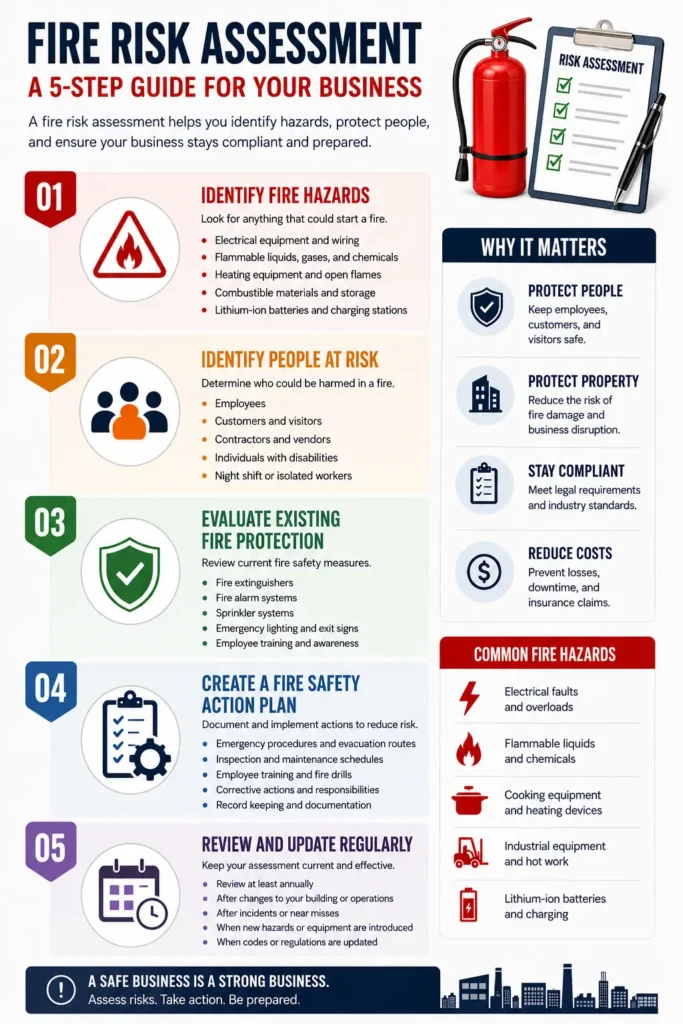
Step 4: Create a Fire Safety Action Plan
A fire risk assessment is only valuable if it leads to action.
Develop a documented fire safety plan that includes:
Emergency Procedures
- Evacuation routes
- Assembly locations
- Emergency contacts
- Incident reporting procedures
Inspection Programs
Schedule routine inspections for:
- Fire extinguishers
- Alarm systems
- Sprinkler systems
- Emergency lighting
Employee Training
Provide regular training sessions and fire drills to ensure employees understand their responsibilities during an emergency.
Maintenance Programs
Address deficiencies promptly and maintain records of inspections, testing, and repairs.
A written plan provides consistency and demonstrates a proactive approach to fire safety management.
Step 5: Review and Update Regularly
Business operations change over time, and fire risk assessments should evolve accordingly.
Review your assessment:
- Annually at minimum
- After renovations or expansions
- When introducing new equipment
- Following occupancy changes
- After fire incidents or near misses
- When regulations or codes are updated
Regular reviews help ensure fire protection measures remain effective as your business grows.
Fire Safety Trends Tennessee Businesses Should Watch in 2026
Lithium-Ion Battery Safety
The rapid adoption of battery-powered equipment continues to introduce new fire risks across commercial and industrial facilities.
Businesses should establish designated charging areas, follow manufacturer recommendations, and ensure employees understand battery safety procedures.
Smart Fire Detection Technology
Advanced fire monitoring systems now use intelligent detection capabilities to identify potential threats earlier and reduce false alarms.
Increased Compliance Expectations
Insurance providers, regulators, and stakeholders increasingly expect businesses to demonstrate documented fire prevention efforts and ongoing risk management practices.
Organizations that proactively address fire safety often experience fewer disruptions and stronger long-term resilience.
Common Fire Risk Assessment Mistakes
Many businesses unintentionally create safety gaps by:
- Treating assessments as a one-time task
- Failing to document findings
- Neglecting employee training
- Overlooking storage hazards
- Ignoring battery charging risks
- Delaying fire protection system maintenance
Avoiding these common mistakes can significantly improve overall safety and compliance.
Partner With Tennessee Fire Safety Experts
While internal reviews can identify obvious hazards, professional fire risk assessments often uncover risks that may otherwise go unnoticed. Experienced fire safety professionals understand applicable codes, inspection requirements, fire protection systems, and emerging industry risks.
At Icon Fire Safety, we help businesses throughout Tennessee improve fire safety, maintain compliance, and protect what matters most. Our team provides fire safety inspections, fire extinguisher services, fire alarm support, emergency preparedness guidance, and comprehensive fire risk assessments tailored to your facility.
Whether you manage a warehouse, office, healthcare facility, retail location, school, or industrial operation, our experts can help you identify hazards, strengthen fire protection measures, and prepare for the challenges of 2026 and beyond.
Contact Icon Fire Safety today to schedule a professional fire risk assessment and ensure your business is prepared, compliant, and protected.
Disclaimer: This article is intended for informational purposes only and should not be considered legal, regulatory, or code-compliance advice. Consult qualified fire safety professionals and applicable authorities for guidance specific to your facility.
This version is designed to rank for topics around fire risk assessments, fire code compliance, business fire safety, fire inspections, and Tennessee commercial fire protection while positioning Icon Fire Safety as the trusted local expert.