
Introduction
Workplace safety is no longer limited to compliance checklists—it is a core responsibility that directly impacts employee wellbeing, business continuity, and organizational reputation. Among all safety measures, fire safety training stands out as one of the most critical components. Fires can occur unexpectedly, escalate rapidly, and cause devastating consequences if employees are unprepared.
Fire safety training equips individuals with the knowledge, awareness, and confidence to respond effectively in emergencies. It bridges the gap between theoretical safety policies and real-world action, ensuring that every employee understands their role during a fire incident.
In today’s safety-driven work culture, organizations must go beyond basic instructions and adopt structured, continuous fire safety training programs that align with modern workplace risks and evolving safety standards.
Understanding Fire Risks in the Workplace
Every workplace—whether an office, factory, warehouse, or retail space—faces potential fire hazards. Electrical faults, flammable materials, overheating equipment, and human error are among the most common causes.
The complexity of modern workplaces increases these risks. Open-plan offices, high-powered machinery, and digital infrastructure create environments where even a small spark can lead to a major incident.
Fire safety training helps employees recognize these hazards early. Instead of reacting to emergencies blindly, trained staff can identify warning signs, report risks proactively, and prevent incidents before they escalate.
This proactive approach aligns with modern safety strategies that emphasize prevention over reaction.
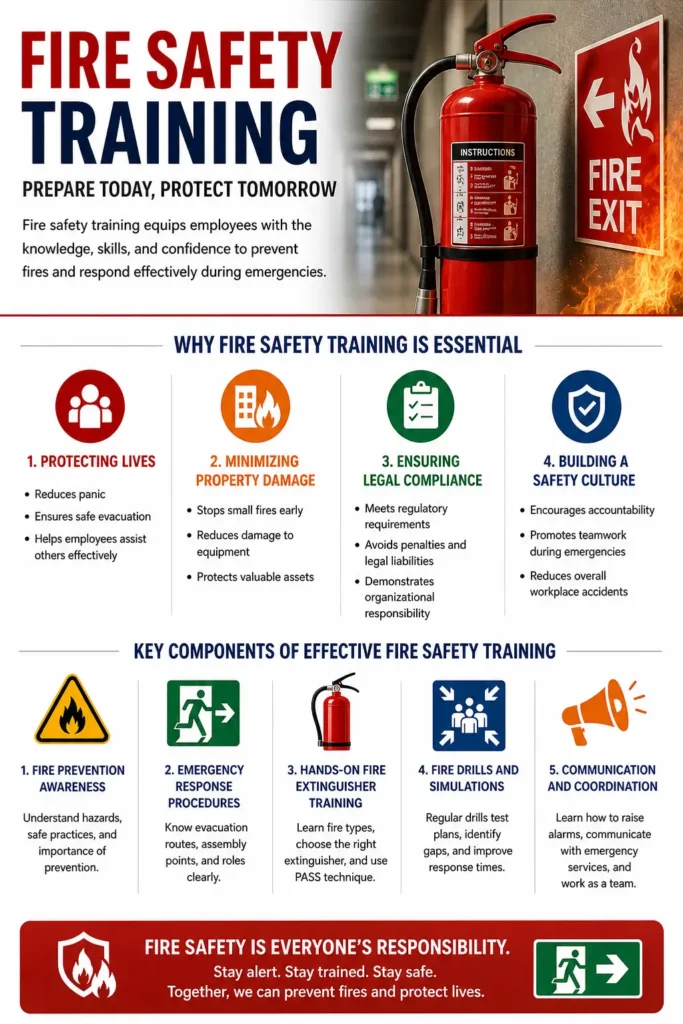
Why Fire Safety Training is Essential
1. Protecting Lives
The primary goal of fire safety training is to save lives. In an emergency, panic is often the biggest obstacle. Training replaces panic with preparedness.
Employees learn:
- How to evacuate safely
- How to assist others
- How to use fire exits effectively
- How to avoid dangerous mistakes
When people know what to do, evacuation becomes faster, more organized, and significantly safer.
2. Minimizing Property Damage
Quick and correct action during the early stages of a fire can prevent it from spreading. Fire safety training teaches employees how to use fire extinguishers and understand fire classifications.
This knowledge can:
- Stop small fires from becoming large disasters
- Reduce damage to equipment and infrastructure
- Protect valuable business assets
3. Ensuring Legal Compliance
Most countries mandate fire safety training as part of workplace safety regulations. Organizations are required to:
- Conduct regular fire drills
- Provide safety instructions
- Maintain emergency preparedness
Failure to comply can result in penalties, legal liabilities, and reputational damage.
4. Building a Safety Culture
Fire safety training contributes to a broader culture of safety within an organization. When employees are trained, they become more aware of risks—not just fire-related, but across all aspects of workplace safety.
A strong safety culture:
- Encourages accountability
- Promotes teamwork during emergencies
- Reduces overall workplace accidents
Key Components of Effective Fire Safety Training
Not all training programs are equally effective. To deliver real impact, fire safety training must be practical, engaging, and relevant.
1. Fire Prevention Awareness
Employees should understand:
- Common fire hazards
- Safe handling of materials
- Importance of housekeeping
- Electrical safety practices
Prevention is always the first line of defense.
2. Emergency Response Procedures
Training should clearly define:
- Evacuation routes
- Assembly points
- Emergency roles and responsibilities
Employees must know exactly what to do without hesitation.
3. Hands-On Fire Extinguisher Training
Theory alone is not enough. Employees should practice using fire extinguishers to build confidence and competence.
This includes:
- Identifying fire types (A, B, C, etc.)
- Choosing the correct extinguisher
- Using proper techniques (PASS method)
4. Fire Drills and Simulations
Regular fire drills are essential to reinforce learning. They help:
- Test evacuation plans
- Identify weaknesses
- Improve response times
Drills also reduce confusion during real emergencies.
5. Communication and Coordination
Effective communication is critical during a fire emergency. Training should include:
- How to raise alarms
- How to communicate with emergency services
- How to coordinate with team members
The Business Impact of Fire Safety Training
Fire safety training is not just a compliance requirement—it is a strategic investment.
Reduced Downtime
Fires can disrupt operations for days or even months. Trained employees can minimize damage and ensure quicker recovery.
Lower Insurance Costs
Organizations with strong safety practices often benefit from lower insurance premiums.
Improved Employee Confidence
When employees feel safe, they perform better. Fire safety training creates a sense of security and trust in the workplace.
Enhanced Brand Reputation
Companies that prioritize safety are viewed as responsible and reliable, which strengthens their reputation among clients, partners, and employees.
Challenges in Implementing Fire Safety Training
Despite its importance, many organizations struggle to implement effective training programs.
Lack of Engagement
Traditional training methods can be boring and ineffective. Employees may not take them seriously.
Irregular Training Schedules
One-time training sessions are not enough. Without regular updates, employees forget critical information.
Limited Practical Exposure
Without hands-on experience, employees may hesitate during real emergencies.
Best Practices for Effective Fire Safety Training
To overcome these challenges, organizations should adopt modern, structured approaches.
1. Make Training Continuous
Fire safety training should not be a one-time event. Regular sessions ensure that knowledge stays fresh and relevant.
2. Use Interactive Methods
Incorporate:
- Simulations
- Real-life scenarios
- Visual demonstrations
Interactive training improves retention and engagement.
3. Customize Training for Different Roles
Different employees have different responsibilities during emergencies. Tailoring training ensures clarity and effectiveness.
4. Evaluate and Improve
Organizations should regularly assess:
- Employee performance during drills
- Response times
- Training effectiveness
Continuous improvement leads to better preparedness.
The Role of Technology in Fire Safety Training
Modern technology is transforming how fire safety training is delivered.
Digital Learning Platforms
Online modules allow employees to learn at their own pace while ensuring consistent training across locations.
Virtual Reality (VR) Training
VR simulations create realistic fire scenarios, helping employees practice without real risks.
Smart Monitoring Systems
Advanced systems can detect fire risks early and provide real-time alerts, complementing human preparedness.
Fire Safety Training and Semantic Relevance in Modern Content
From a content strategy perspective, topics like workplace safety benefit from semantic depth rather than keyword repetition. Modern search engines evaluate content based on meaning, context, and user intent rather than just keywords.
This means effective content on fire safety should:
- Cover related concepts like risk management, emergency response, and compliance
- Use clear, precise language that answers real user queries
- Provide structured, meaningful information
Additionally, clarity and structured content improve both user understanding and search visibility, reinforcing the importance of well-organized safety information.
For official standards and compliance requirements, refer to the workplace fire safety guidelines by OSHA, which outline essential training, evacuation planning, and fire prevention measures.
Conclusion
Fire safety training is a vital pillar of workplace safety. It protects lives, minimizes damage, ensures compliance, and strengthens organizational resilience. In an unpredictable world, preparedness is the key to prevention and survival.
Organizations that invest in comprehensive, ongoing fire safety training not only meet regulatory requirements but also create safer, more confident, and more productive workplaces.
Ultimately, fire safety training is not just about responding to emergencies—it is about preventing them, managing them effectively, and ensuring that every employee returns home safely at the end of the day.