When it comes to fire protection, the word licensed is much more than a credential on a business card. It represents training, accountability, regulatory compliance, and the assurance that critical life-safety equipment is being inspected and maintained correctly.
Recent enforcement actions across the country highlight just how seriously authorities take contractor licensing. Following the 2025 Los Angeles wildfires, officials filed felony charges against unlicensed contractors operating in disaster zones and publicly urged consumers to verify contractor licenses before hiring. For business owners in Nashville and throughout Middle Tennessee, it’s a reminder that choosing a qualified, licensed fire protection contractor is one of the most important decisions you can make for your property, employees, and customers.
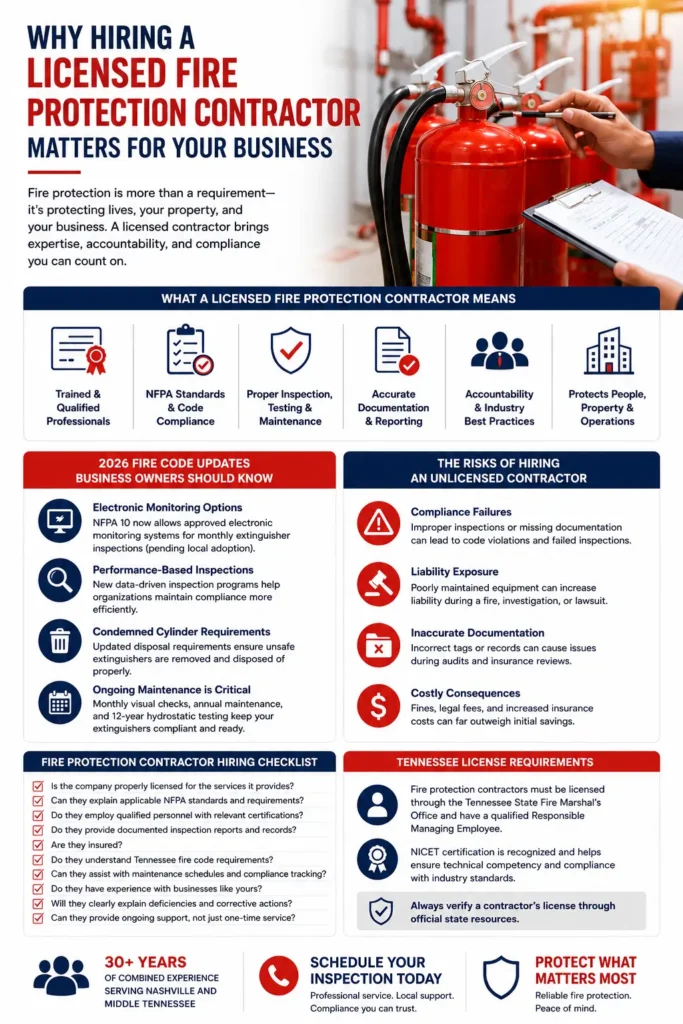
What a Licensed Fire Protection Contractor Actually Means
A licensed fire protection contractor is a company that has met specific state requirements to perform fire protection work, including inspection, installation, testing, maintenance, and compliance services for fire safety systems and equipment.
In practical terms, hiring a licensed fire protection contractor means you’re working with professionals who understand:
- National Fire Protection Association (NFPA) standards
- State and local fire code requirements
- Inspection and maintenance procedures
- Documentation and compliance reporting
- Industry best practices for life-safety systems
Licensing also creates accountability. Licensed contractors must meet regulatory standards and maintain qualifications required by state authorities. This helps ensure that fire extinguishers, suppression systems, and other fire protection equipment are serviced correctly and documented properly.
At Icon Fire & Safety, our team approaches every inspection with the understanding that compliance isn’t just about checking a box. It’s about helping businesses protect people, property, and operations through reliable fire protection services.
2026 Fire Code Updates Business Owners Should Know
Fire protection standards continue to evolve, and business owners should stay informed about changes that affect compliance responsibilities.
NFPA 10 Introduces Electronic Monitoring Options
One of the most notable updates in the 2026 edition of NFPA 10 involves approved electronic monitoring and inspection technology. The standard now permits certain approved electronic monitoring systems as an alternative method for monthly fire extinguisher inspection programs.
However, business owners should understand an important distinction: local jurisdictions must adopt these provisions before they become enforceable locally. Until then, traditional monthly inspection requirements generally remain in place.
Performance-Based Inspection Programs
The 2026 edition of NFPA 10 also introduces performance-based inspection programs. These programs allow organizations to evaluate inspection practices using data-driven approaches while still maintaining compliance with safety requirements.
For facility managers overseeing multiple locations, this represents a significant modernization of fire extinguisher management.
New Requirements for Condemned Cylinders
NFPA 10 now includes updated disposal requirements for condemned non-DOT fire extinguisher cylinders. These changes help ensure that damaged or unsafe extinguishers are permanently removed from service and disposed of properly.
Monthly, Annual, and Long-Term Maintenance Requirements
Many business owners are surprised to learn that fire extinguisher compliance involves multiple inspection intervals.
According to NFPA 10 requirements:
- Monthly visual inspections are typically the owner’s responsibility.
- Annual maintenance must be performed by qualified and certified personnel.
- Rechargeable extinguishers generally require hydrostatic testing or replacement at 12-year intervals, depending on extinguisher type and condition.
Missing any of these requirements can create compliance issues and potentially affect insurance claims following a fire incident.
For this reason, many Nashville-area businesses partner with a licensed fire protection contractor to help manage inspection schedules, maintenance records, and compliance documentation.
The Risks of Hiring an Unlicensed Contractor
At first glance, hiring an unlicensed contractor may appear to save money. In reality, it often creates significant financial and legal risk.
Compliance Failures
If fire extinguishers are improperly inspected, tagged, or maintained, businesses may fail fire marshal inspections or encounter code violations.
Liability Exposure
In the event of a fire, improperly maintained equipment could become a major issue during investigations, insurance reviews, or legal proceedings.
Inaccurate Documentation
Inspection tags and maintenance records are often reviewed during audits, inspections, and insurance evaluations. Incomplete or incorrect documentation can create unnecessary complications.
Lessons from the Los Angeles Wildfires
A real-world example emerged after the 2025 Los Angeles wildfires. Authorities announced felony charges against multiple unlicensed contractors who allegedly performed work in disaster-affected areas. Officials also launched public awareness efforts encouraging consumers to verify contractor licenses through state resources and QR-code verification systems.
While Tennessee regulations differ from California’s, the underlying message remains the same: licensing exists to protect consumers and ensure qualified professionals are performing regulated work.
For Nashville businesses, hiring an unlicensed contractor could expose your organization to unnecessary compliance, insurance, and operational risks.
How Tennessee Licenses Fire Protection Contractors
Tennessee maintains specific requirements for fire protection contractors through the Tennessee State Fire Marshal’s Office.
Fire protection contractors performing regulated work must meet certification requirements established by the state. This includes maintaining a qualified Responsible Managing Employee and demonstrating competency through recognized industry qualifications.
One of the most respected credentials in the fire protection industry is NICET (National Institute for Certification in Engineering Technologies) certification. NICET certification validates technical knowledge and professional competence in fire protection disciplines.
The Tennessee State Fire Marshal’s Office uses these certification standards to help ensure that licensed contractors possess the expertise necessary to perform fire protection work safely and correctly.
Additionally, contractors must comply with applicable licensing requirements established by the Tennessee Board for Licensing Contractors when performing qualifying construction-related work.
At Icon Fire & Safety, we understand the importance of maintaining professional qualifications and adhering to Tennessee’s regulatory standards. Our work is guided by NFPA requirements, state regulations, and industry best practices developed over decades of combined experience.
What to Ask Before Hiring a Fire Protection Company
Before choosing a fire protection provider, use the following checklist to evaluate qualifications and compliance capabilities.
Fire Protection Contractor Hiring Checklist
□ Is the company properly licensed for the services it provides?
□ Can they explain applicable NFPA standards and inspection requirements?
□ Do they employ qualified personnel with relevant certifications?
□ Do they provide documented inspection reports and compliance records?
□ Are they insured?
□ Do they understand Tennessee fire code requirements?
□ Can they assist with annual inspections, maintenance schedules, and compliance tracking?
□ Do they have experience serving businesses similar to yours?
□ Will they clearly explain deficiencies and corrective actions?
□ Can they provide ongoing support instead of one-time service only?
The answers to these questions can reveal a great deal about a company’s professionalism and commitment to fire safety compliance.
Why Choose Icon Fire & Safety
Fire protection isn’t an area where shortcuts pay off.
At Icon Fire & Safety, our team brings more than 30 years of combined industry experience serving businesses throughout Nashville and Middle Tennessee. We understand the challenges facility managers, property owners, and business operators face when navigating fire code compliance requirements.
Our approach focuses on:
- NFPA-aligned fire extinguisher inspections
- Accurate compliance tagging and documentation
- Professional maintenance and testing services
- Responsive local support
- Clear communication and practical recommendations
As a licensed and insured fire protection company, we help businesses stay compliant while providing confidence that their fire extinguishers are ready when needed most.
Schedule Your Fire Extinguisher Inspection Today
Whether you’re preparing for an upcoming inspection, managing multiple facilities, or simply want confidence that your fire extinguishers meet current standards, Icon Fire & Safety can help.
Contact our team today to schedule professional fire extinguisher service, annual maintenance, or compliance inspections throughout Nashville and Middle Tennessee.
Learn more:
- Contact Us: https://iconfiresafety.com/contact-us/
- Annual Fire Extinguisher Inspections: https://iconfiresafety.com/annual-inspection-of-fire-extinguishers/
References
- NFPA Code Updates for 2026 (Electronic Monitoring, Performance-Based Programs): https://summitfire.com/insights/blog/nfpa-codes-whats-new-in-2026/
- NFPA 10 Fire Extinguisher Inspection Updates (2026 Edition): https://www.withessential.com/resources/nfpa-10-fire-extinguisher-inspection
- NFPA 10 Fire Extinguisher Inspection Requirements (Monthly, Annual, Hydrostatic Testing): https://homerfireprotection.com/nfpa-10-fire-extinguisher-inspection-requirements-2026/
- Tennessee State Fire Marshal’s Office – Fire Protection Contractor Licensing: https://www.tn.gov/commerce/fire/permit/licensing/sprinklers.html
- Tennessee Fire Prevention and State Fire Marshal Information: https://www.tn.gov/commerce/fire-prevention.html
- Los Angeles Wildfire Contractor Enforcement Action (2025): https://www.cbsnews.com/losangeles/news/felony-charges-filed-unlicensed-contractors-eaton-fire-altadena/
- National Fire Protection Association (NFPA): https://www.nfpa.org/
- U.S. Fire Administration: https://www.usfa.fema.gov/
- Tennessee Board for Licensing Contractors: https://www.tn.gov/commerce/regboards/contractors.html