
Tennessee Fire Extinguisher Requirements
Understanding fire extinguisher requirements is essential to maintaining workplace safety, meeting code compliance standards, and ensuring your business is prepared for emergencies.
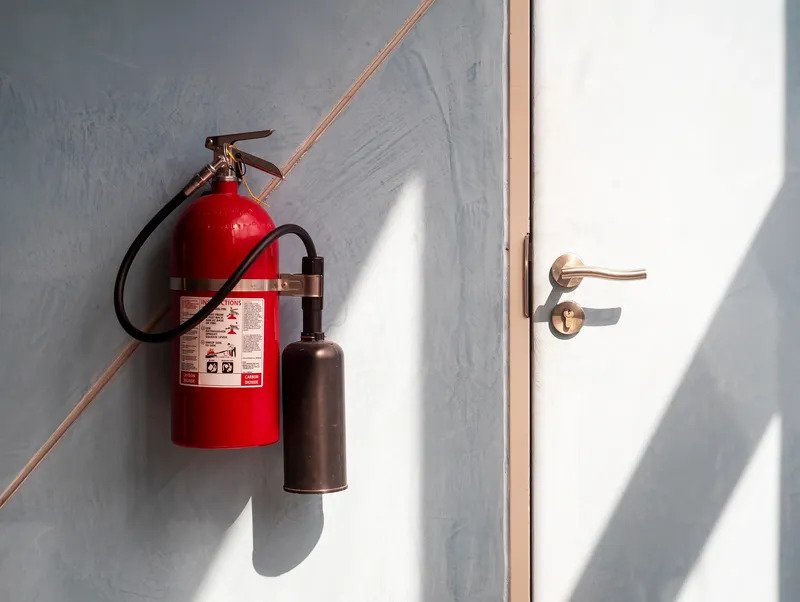
Whether you run an office, restaurant, warehouse, or retail shop, Tennessee law requires every place of business to have the right type of fire extinguishers properly installed, maintained, and inspected. Here’s what that means for you:
Every Business Must Comply with Fire Extinguisher Requirements
- All commercial buildings in Tennessee must have portable fire extinguishers installed and ready for use.
- The number and type of extinguishers depend on your building size and the type of work you do (for example, offices vs. kitchens vs. workshops).
- Extinguishers must be rated for the types of fire hazards in your space:
- Class A – ordinary combustibles (paper, wood, cloth)
- Class B – flammable liquids (gas, grease, oil)
- Class C – electrical fires
- Class K – cooking oils and grease (commercial kitchens)
Location & Mounting
- Fire extinguishers must be easily visible and reachable — not behind boxes, furniture, or locked doors.
- They should be located along exit paths and near common hazard areas (like kitchens or equipment rooms).
- The maximum travel distance to reach an extinguisher is usually 75 feet for most hazards.
- Mount them on the wall or place them in a clearly marked cabinet — the handle should be about 3½ to 5 feet from the floor.
Required Inspections
Keeping extinguishers in place isn’t enough — they must undergo the annual inspection of fire extinguishers and be serviced regularly.
Visual Check
- WHO: You or your staff
- WHEN: Monthly
- WHAT IS DONE: Make sure the extinguisher is in place, pressure gauge is in the green, and no damage or blockage.
Annual Inspection
- WHO: Icon Fire & Safety
- WHEN: Every 12 months
- WHAT IS DONE: Full maintenance check, tag update, and certification sticker applied.
Internal Maintenance / Hydrostatic Testing
- WHO: Icon Fire & Safety
- WHEN: Every 6–12 years (depending on type)
- WHAT IS DONE: Extinguisher is emptied, tested, refilled, and re-certified per NFPA standards.
Service Tags Are Required
Every extinguisher must display up-to-date fire extinguisher tags showing:
- The date of last professional inspection
- The company’s license number
- The technician’s initials or ID
If your tag is missing, faded, or outdated — it’s out of compliance.
Who Can Service Fire Extinguishers
Only companies licensed by the State of Tennessee are legally allowed to inspect, maintain, or recharge extinguishers.
This ensures your equipment meets NFPA 10 standards — the national fire extinguisher safety code Tennessee follows.
Penalties for Non-Compliance
Failing to maintain your fire extinguishers can lead to:
- Fire code violations or fines from your local fire marshal
- Insurance issues if a fire occurs and extinguishers were not maintained
- Increased liability for property damage or injury