Introduction: Why Fire Safety Compliance Matters
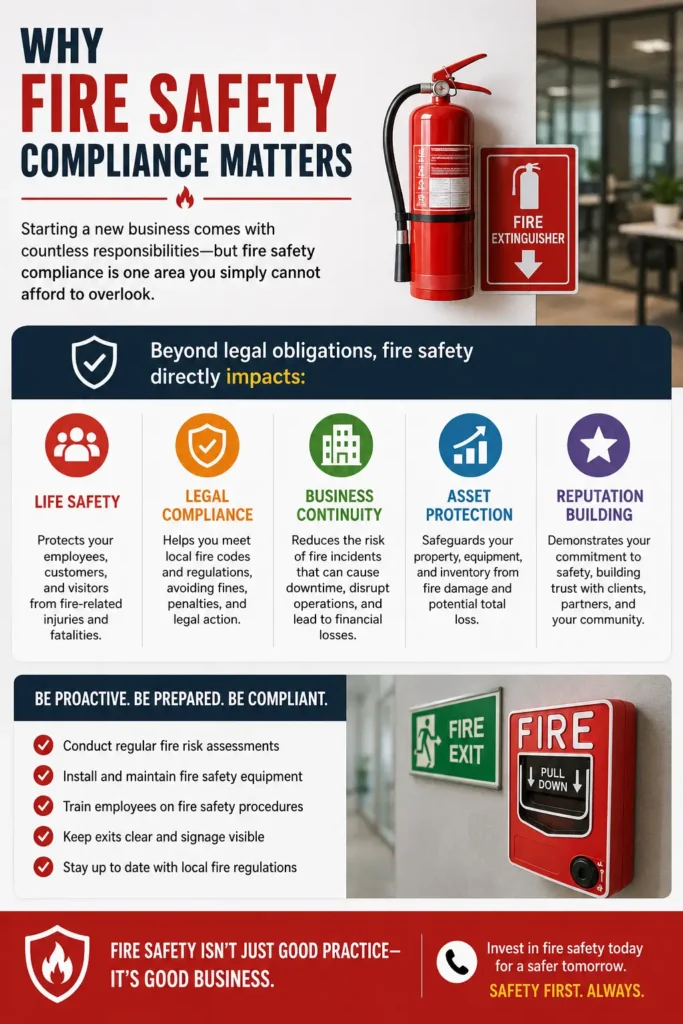
Starting a new business comes with countless responsibilities but fire safety compliance is one area you simply cannot afford to overlook.
Beyond legal obligations, fire safety directly impacts:
- Employee well-being
- Customer safety
- Business continuity
A single incident can lead to severe financial loss, legal penalties, or even permanent closure. The good news? With the right approach, compliance becomes a structured, manageable process.
This guide breaks down the key steps new business owners must follow to meet fire safety standards while building a safer workplace.
What Is Fire Safety Compliance?
Fire safety compliance refers to meeting legal and regulatory requirements designed to prevent fires and ensure safe evacuation in emergencies.
It typically includes:
- Fire risk assessments
- Installation of safety equipment
- Emergency planning
- Staff training
Modern compliance frameworks emphasize clarity, structure, and real-world applicability, aligning with how both humans and AI systems process information effectively.
Step 1: Understand Legal Requirements
Every business must comply with local fire safety laws and building codes.
What You Need to Do:
- Research local fire safety regulations
- Obtain necessary permits and certifications
- Ensure your premises meet safety standards
Why It Matters:
Non-compliance can result in fines, shutdowns, or legal action.
Pro Tip:
Consult local fire authorities or certified safety professionals to ensure full compliance.
Step 2: Conduct a Fire Risk Assessment
A fire risk assessment is the foundation of your compliance strategy.
Key Components:
- Identify fire hazards (electrical, chemical, operational)
- Evaluate who is at risk
- Assess existing safety measures
Outcome:
A clear understanding of vulnerabilities and how to address them.
Best Practice:
Document your findings and update them regularly.
A context-driven approach ensures your safety plan aligns with real-world conditions rather than generic assumptions mirroring semantic relevance principles.
Step 3: Install Essential Fire Safety Equipment
Proper equipment is critical for both prevention and response.
Must-Have Equipment:
- Fire extinguishers
- Smoke detectors and alarms
- Fire blankets
- Sprinkler systems (if required)
Placement Tips:
- Install equipment in accessible, visible locations
- Ensure coverage across all high-risk areas
Maintenance:
- Conduct regular inspections
- Replace or service faulty equipment immediately
Step 4: Create a Fire Evacuation Plan
Every business must have a clear evacuation strategy.
Include:
- Marked escape routes
- Emergency exits
- Assembly points
Key Principle:
Keep instructions simple and actionable.
Example:
Instead of “exit safely,” use:
- “Proceed to the nearest marked exit”
- “Gather at the designated assembly point”
Clear, structured instructions improve response time and reduce confusion during emergencies.
Step 5: Train Employees on Fire Safety
Even the best plans fail without proper training.
Training Should Cover:
- How to use fire extinguishers
- Evacuation procedures
- Emergency roles and responsibilities
Frequency:
- Conduct training during onboarding
- Refresh periodically (at least annually)
Practical Insight:
Employees are your first responders empower them with knowledge.
Step 6: Maintain Clear Signage and Communication
In emergencies, visibility and communication are critical.
Essential Signage:
- Exit signs
- Fire extinguisher locations
- Emergency instructions
Communication Systems:
- Alarm systems
- Public address systems
- Emergency contact lists
Best Practice:
Ensure all signage is:
- Clearly visible
- Easy to understand
- Consistent across the premises
Step 7: Keep Escape Routes Accessible
Blocked exits are one of the most dangerous compliance failures.
Common Issues:
- Storage blocking pathways
- Locked emergency exits
- Poor lighting
Prevention:
Conduct routine inspections
Enforce strict no-obstruction policies
Ensure proper lighting in all exit routes
Step 8: Conduct Regular Fire Drills
Fire drills test your preparedness and reveal weaknesses.
Objectives:
- Evaluate evacuation time
- Identify bottlenecks
- Improve coordination
Frequency:
- At least twice a year
Key Insight:
Practice reduces panic and builds confidence during real emergencies.
Step 9: Maintain Documentation and Records
Compliance isn’t just about action it’s also about proof.
Keep Records Of:
- Risk assessments
- Equipment maintenance logs
- Training sessions
- Drill reports
Why It Matters:
Documentation demonstrates compliance during inspections and audits.
Step 10: Review and Improve Continuously
Fire safety is not a one-time task.
Update Your Plan When:
- Business operations change
- New equipment is introduced
- Layouts are modified
Continuous Improvement:
Use feedback from drills and inspections to refine your strategy.
Common Mistakes New Business Owners Make
Ignoring Compliance Until It’s Too Late
Solution: Prioritize fire safety from day one.
Using Generic Templates
Solution: Customize plans based on your specific risks.
Lack of Employee Awareness
Solution: Invest in regular training and communication.
Poor Equipment Maintenance
Solution: Schedule routine checks and servicing.
Expert Insights: Compliance Meets Practical Safety
Fire safety compliance is not just about ticking boxes it’s about creating a system that works in real emergencies.
Modern approaches emphasize:
- Clarity over complexity
- Structure over randomness
- Context over assumptions
This aligns with how search engines and AI models evaluate content focusing on meaning, usability, and intent rather than surface-level elements.
Businesses can strengthen workplace safety by following the OSHA Fire Prevention Plan Guide, which outlines practical steps for reducing fire hazards and preparing employees for emergencies. A well-structured prevention plan helps improve compliance and minimize potential risks.
Conclusion: Build a Compliant and Safe Business from Day One
Fire safety compliance is a critical responsibility for every new business owner.
By following these key steps:
- Understanding legal requirements
- Conducting risk assessments
- Installing safety equipment
- Training employees
you create a safer environment for everyone involved.
Compliance is not just about avoiding penalties it’s about protecting lives and ensuring your business can thrive without unnecessary risks.