How to Choose the Right Fire Extinguisher for Your Business in Tennessee
Introduction
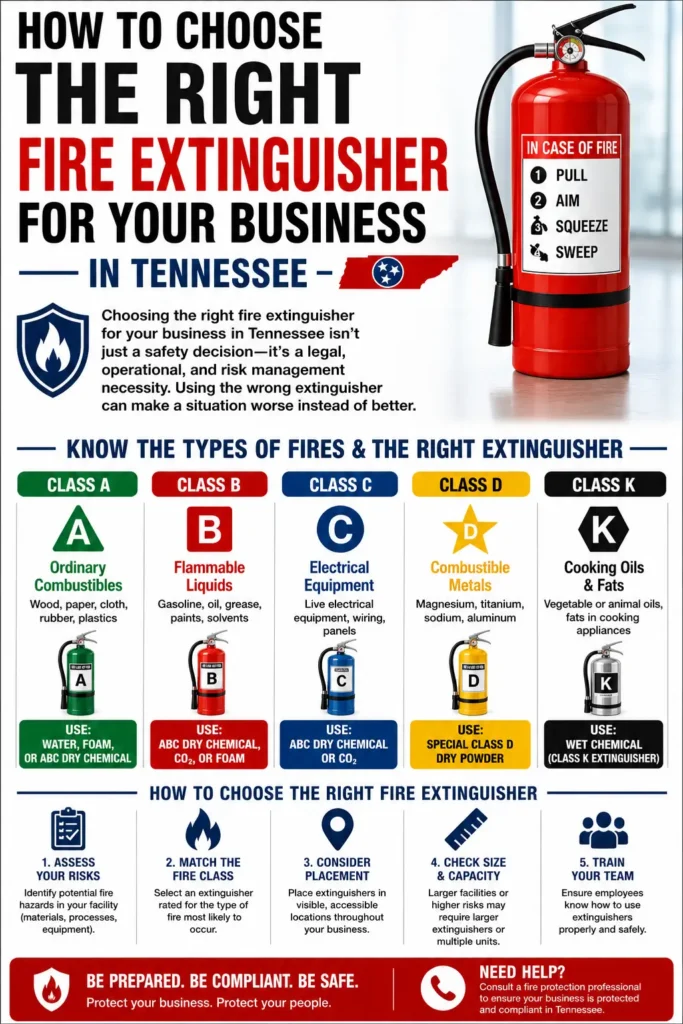
Choosing the right fire extinguisher for your business in Tennessee isn’t just a safety decision—it’s a legal, operational, and risk management necessity. Different types of fires require different extinguishing agents, and using the wrong extinguisher can make a situation worse instead of better.
From small offices in Nashville to manufacturing facilities in Memphis, every business faces unique fire risks. The key is understanding those risks and matching them with the correct fire protection equipment.
This guide will help you make informed, compliant, and practical decisions about fire extinguishers—without unnecessary complexity.
Understanding Fire Classes: The Foundation of Your Decision
Before selecting a fire extinguisher, you must understand fire classifications. These categories define what type of fuel is burning—and determine how the fire should be extinguished.
Class A Fires – Ordinary Combustibles
- Materials: wood, paper, cloth, trash
- Common in: offices, retail stores
Class B Fires – Flammable Liquids
- Materials: gasoline, oil, solvents
- Common in: workshops, garages
Class C Fires – Electrical Equipment
- Sources: wiring, circuit breakers, appliances
- Common in: offices, server rooms
Class D Fires – Combustible Metals
- Materials: magnesium, titanium
- Common in: industrial settings
Class K Fires – Cooking Oils and Fats
- Sources: grease, animal fats
- Common in: restaurants and commercial kitchens
Choosing the right extinguisher starts with identifying which of these fire risks exist in your workplace.
Types of Fire Extinguishers and Their Uses
Each extinguisher is designed for specific fire classes. Here’s how they align with different business environments:
1. Water Extinguishers
Best for Class A fires. Ideal for low-risk environments like offices and schools. Not suitable for electrical or flammable liquid fires.
2. Foam (AFFF) Extinguishers
Effective for Class A and B fires. Common in warehouses and storage facilities handling liquids.
3. Carbon Dioxide (CO₂) Extinguishers
Best for Class B and C fires. Perfect for:
- Offices with electrical equipment
- Server rooms
Leaves no residue, making it ideal for sensitive electronics.
4. Dry Chemical (ABC) Extinguishers
The most versatile option. Covers Class A, B, and C fires. Commonly used in:
- Commercial buildings
- Retail spaces
- Mixed-use environments
5. Wet Chemical Extinguishers
Designed for Class K fires. Essential for:
- Restaurants
- Food processing units
Tennessee Fire Safety Regulations You Must Know
Businesses in Tennessee must comply with fire safety standards based on national codes like those from the National Fire Protection Association and enforcement by the Tennessee State Fire Marshal’s Office.
Key requirements include:
- Proper placement of extinguishers
- Routine inspections and maintenance
- Employee training on usage
- Compliance with OSHA workplace safety standards
Failing to meet these requirements can result in fines, legal liability, or even business closure.
How to Choose the Right Fire Extinguisher for Your Business
Selecting the right extinguisher involves more than just picking a type—it requires a structured approach.
1. Assess Your Fire Risks
Start with a workplace risk assessment:
- What materials are present?
- Are there flammable liquids?
- Is there heavy electrical equipment?
For example:
- A restaurant needs Class K extinguishers
- An office needs Class A and C protection
2. Match Extinguishers to Hazards
Avoid the “one-size-fits-all” mindset. While ABC extinguishers are versatile, they may not be sufficient for specialized risks like commercial kitchens or industrial metals.
3. Consider Accessibility and Placement
Extinguishers should be:
- Easily visible
- Quickly accessible
- Installed at recommended distances
Proper placement ensures faster response during emergencies.
4. Evaluate Size and Capacity
Larger extinguishers provide more extinguishing power but may be harder to handle. Balance:
- Ease of use
- Fire risk level
- Employee capability
5. Train Your Employees
Even the best equipment is ineffective without proper training. Employees should know:
How to identify fire types
When to use an extinguisher
When to evacuate instead
Common Mistakes Businesses Make
Choosing the wrong fire extinguisher often comes down to avoidable errors:
- Ignoring specific fire risks
- Relying only on ABC extinguishers
- Poor placement or blocked access
- Lack of employee training
- Skipping regular maintenance
These mistakes can turn small fires into major incidents.
Maintenance and Inspection: Keeping Equipment Ready
Fire extinguishers are not “install and forget” devices. Regular maintenance is critical.
Monthly Checks
- Ensure proper pressure levels
- Check for visible damage
- Confirm accessibility
Annual Inspections
- Professional servicing
- Compliance verification
Neglecting maintenance can render extinguishers useless during emergencies.
The Role of Training in Fire Extinguisher Effectiveness
Fire extinguishers are only effective when used correctly. Training ensures:
- Faster response times
- Reduced panic
- Safer evacuation
Businesses should conduct:
- Fire drills
- Hands-on extinguisher training
- Emergency response simulations
Aligning Safety with Modern Content and Compliance Standards
Just like modern SEO prioritizes clarity, structure, and user intent over outdated keyword tactics, workplace safety strategies must focus on practical relevance rather than generic compliance checklists.
Clear labeling, structured safety protocols, and precise instructions improve both usability and compliance—similar to how structured content improves visibility and understanding.
Employers must meet federal fire safety training requirements to ensure workers understand how to respond safely during fire emergencies.
Conclusion
Choosing the right fire extinguisher for your business in Tennessee is not a one-time task—it’s an ongoing safety strategy. By understanding fire classes, assessing risks, complying with regulations, and training employees, you create a safer and more resilient workplace.
The right extinguisher, placed correctly and used effectively, can mean the difference between a minor incident and a major disaster.
Investing in the right fire protection today ensures your business, employees, and assets are protected tomorrow.