Introduction: Why Fire Safety Is Critical for Small Businesses
Fire Hazards are often underestimated in small businesses. Unlike large corporations, small businesses typically lack dedicated safety teams, making them more vulnerable to preventable hazards.
From faulty wiring to improper storage of flammable materials, even minor oversights can lead to devastating consequences—financial loss, legal liability, and most importantly, risk to human life.
This guide identifies the most common fire hazards in small businesses and provides actionable solutions to eliminate or reduce those risks effectively.
1. Electrical Equipment Misuse
Electrical faults are one of the leading causes of workplace fires.
Common Issues:
- Overloaded power strips
- Damaged wiring
- Outdated electrical systems
Why It’s Dangerous:
Excessive load or faulty wiring can generate heat, leading to sparks and eventual fire outbreaks.
How to Avoid It:
- Avoid plugging multiple high-power devices into one outlet
- Replace damaged cords immediately
- Schedule regular electrical inspections
Expert Tip:
Use certified equipment and ensure installations meet local safety standards.
2. Improper Storage of Flammable Materials
Many small businesses, especially in retail, manufacturing, or food services, handle flammable substances.
Example:
- Cleaning chemicals
- Paints and solvents
- Fuel or gas cylinders
Risk Factor:
Storing these materials near heat sources or without proper ventilation increases fire risk significantly.
Prevention Stretegies
- Store flammable materials in designated safety cabinets
- Keep them away from ignition sources
- Label all containers clearly
3. Poor Housekeeping Practices
Clutter may seem harmless, but it’s a major Fire Hazards.
Common Problems:
- Accumulated paper, dust, or waste
- Blocked exits
- Storage near electrical equipment
Why It Matters:
Clutter fuels fires and obstructs evacuation routes.
How to Fix It:
- Implement daily cleaning routines
- Keep emergency exits clear at all times
- Dispose of waste regularly
Clear environments improve both safety and operational efficiency.
4. Faulty Heating Equipment
Portable heaters and HVAC systems are often overlooked risks.
Common Hazards:
- Heaters placed near flammable items
- Lack of maintenance
- Use of low-quality equipment
Prevention:
- Maintain a safe distance between heaters and combustible materials
- Service heating systems regularly
- Turn off equipment when not in use
5. Kitchen Related Fire Risks
For businesses with kitchens (cafes, restaurants, offices), fire hazards are even higher.
Key Risks:
- Grease buildup
- Unattended cooking
- Faulty appliances
How to Prevent:
- Clean kitchen equipment regularly
- Never leave cooking unattended
- Install fire suppression systems
Practical Insight:
Grease fires spread rapidly, regular cleaning is your first line of defense.
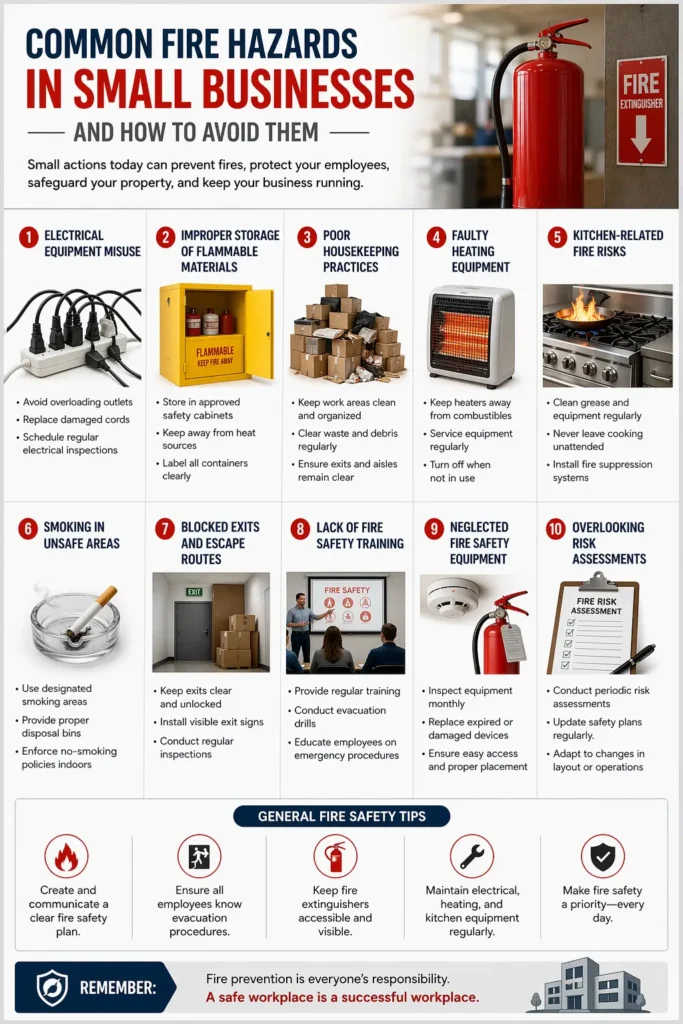
6. Smoking in Unsafe Areas
Improper disposal of smoking materials is a common yet preventable hazard.
Risks Include:
- Cigarettes discarded near flammable materials
- Lack of designated smoking zones
Solutions:
- Create designated smoking areas
- Provide proper disposal bins
- Enforce strict no-smoking policies indoors
7. Blocked Fire Exits and Escape Routes
Even if a fire starts small, blocked exits can turn it into a disaster.
Common Issues:
- Storage blocking emergency exits
- Locked or inaccessible doors
- Poor signage
Prevention:
- Keep all exits clear and unlocked during working hours
- Install visible exit signs
- Conduct regular inspections
Key Insight:
A clear exit can save more lives than any fire extinguisher.
8. Lack of Fire Safety Training
Even the best safety systems fail if people don’t know how to respond.
Common Gaps:
- Employees unaware of evacuation procedures
- No training on fire extinguisher use
- Panic during emergencies
How to Address:
- Conduct regular fire safety training
- Run evacuation drills
- Educate staff on emergency roles
9. Neglected Fire Safety Equipment
Fire extinguishers and alarms are only effective if they work.
Common Issues:
- Expired extinguishers
- Non-functional alarms
- Lack of maintenance
Prevention:
- Inspect fire safety equipment monthly
- Replace outdated devices
- Ensure proper placement and accessibility
10. Overlooking Risk Assessments
Many small businesses operate without a formal fire risk assessment.
Why This Is a Problem:
Without identifying risks, prevention becomes guesswork.
Solution:
- Conduct periodic fire risk assessments
- Update safety plans regularly
- Adapt to changes in layout or operations
A proactive approach ensures your safety strategy remains relevant and effective.
Common Challenges Small Businesses Face
Limited Budget
Solution: Prioritize high-impact safety measures like electrical checks and fire extinguishers.
Lack of Awareness
Solution: Invest in basic training and clear communication.
Complacency
Solution: Treat fire safety as an ongoing responsibility—not a one-time task.
Expert Insights: Building a Safer Workplace
Modern safety strategies emphasize clarity, structure, and real-world usability.
Key Takeaways:
- Focus on real risks, not assumptions
- Use clear, actionable instructions
- Regularly review and improve safety measures
Conclusion: Prevention Is Always Better Than Recovery
Fire hazards in small businesses are often preventable with the right knowledge and proactive measures.
By addressing:
- Electrical safety
- Proper storage
- Clean work environments
- Employee training
you significantly reduce the risk of fire incidents.
A safe workplace isn’t just about compliance, it’s about protecting lives, assets, and your business’s future.