
Fire Safety Compliance Matters for Every Business
If you manage a commercial building, office, restaurant, or warehouse, fire safety equipment is not optional. Fire extinguishers must work immediately when an emergency occurs. That’s why annual fire extinguisher inspections are required by national fire safety standards and local regulations.
For businesses in Nashville and throughout Tennessee, routine inspections help ensure compliance with fire codes while protecting employees, customers, and property.
Yet many business owners are unsure about:
- How often extinguishers must be inspected
- What happens during an annual inspection
- Which standards apply (OSHA, NFPA, or local fire codes)
- Who is qualified to perform inspections
This guide explains everything you need to know about annual fire extinguisher inspection requirements and how to stay compliant.
Why Annual Fire Extinguisher Inspections Are Required
The External Problem: Equipment May Fail When Needed
Fire extinguishers are mechanical safety devices. Over time they can develop issues such as:
- Loss of pressure
- Damaged hoses or nozzles
- Corrosion
- Broken safety seals
- Improper mounting
Without proper inspection and maintenance, an extinguisher may fail during an emergency, putting lives and property at risk.
The Internal Problem: Business Owners Fear Compliance Violations
Many facility managers and business owners worry about:
- Failing a fire marshal inspection
- Receiving OSHA fines
- Being liable for workplace safety violations
Fire safety regulations can feel complicated, especially when different agencies set requirements.
The Philosophical Problem: Safety Should Never Be Optional
Every workplace deserves a safe environment. Fire safety equipment must function properly when people depend on it most. Regular inspections ensure organizations take responsibility for protecting lives.
What Regulations Require Annual Fire Extinguisher Inspections?
Two primary standards govern extinguisher inspection requirements in the United States.
NFPA 10 Fire Extinguisher Standard
The National Fire Protection Association (NFPA) sets the widely adopted NFPA 10 standard, which requires:
- Annual maintenance by a trained professional
- Monthly visual inspections by building staff
- Hydrostatic testing at specific intervals
- Proper documentation and tagging
NFPA 10 ensures extinguishers remain functional, accessible, and ready for emergency use.
OSHA Workplace Safety Requirements
The Occupational Safety and Health Administration (OSHA) also requires employers to maintain fire extinguishers under 29 CFR 1910.157.
Employers must ensure:
- Fire extinguishers are inspected regularly
- Equipment is maintained in operable condition
- Inspection records are available
- Employees have access to properly placed extinguishers
OSHA often references NFPA standards when evaluating compliance.
What Happens During an Annual Fire Extinguisher Inspection?
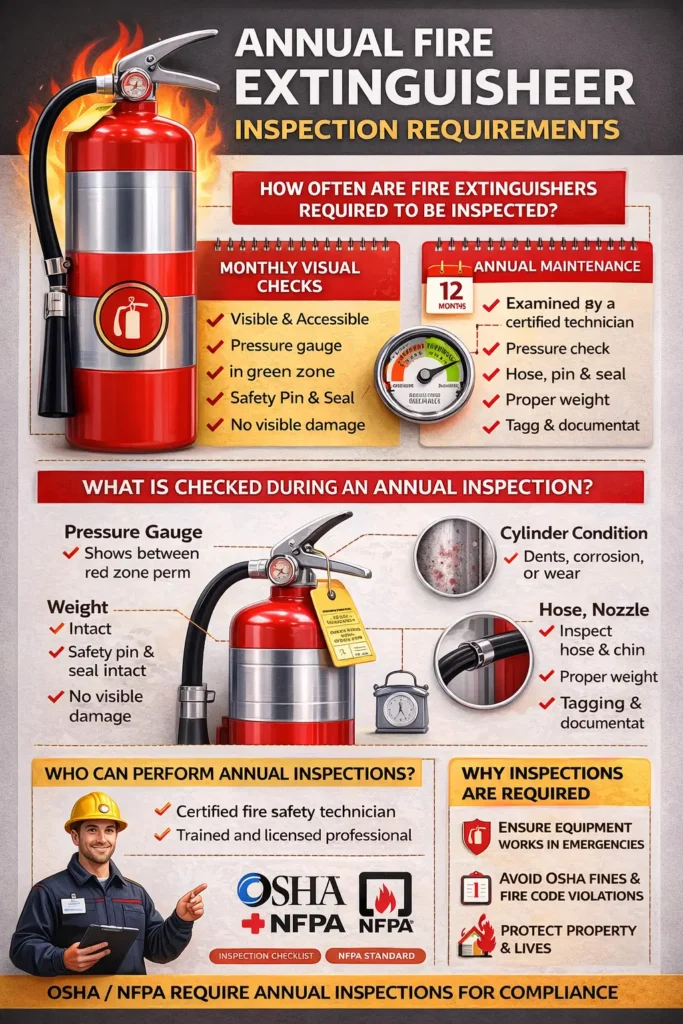
An annual inspection goes beyond the quick monthly visual check. A certified fire safety technician performs a detailed maintenance evaluation.
Key Steps in the Annual Inspection
- Physical Examination: Check the cylinder body for corrosion, dents, or damage.
- Pressure VerificationEnsure pressure gauges are within proper operating range.
- Safety Components Check: Inspect tamper seals, pull pins, hoses, and handles.
- Weight Verification: Confirm the extinguisher still contains the correct amount of extinguishing agent.
- Labeling and Tagging: Update inspection tags with technician certification and inspection date.
- Mounting and Accessibility: Ensure extinguishers are properly installed and visible.
If problems are discovered, the technician may recommend recharging, repair, or replacement.
Monthly vs Annual Fire Extinguisher Inspections
Many people confuse monthly visual inspections with annual professional inspections.
Monthly Inspection (Performed by Staff)
This quick check confirms:
- The extinguisher is visible and accessible
- The pressure gauge is in the green zone
- The pin and tamper seal are intact
- No visible damage exists
These checks take only a few seconds but must be documented.
Annual Inspection (Performed by Certified Technician)
The annual inspection includes:
- Full mechanical evaluation
- Maintenance service
- Compliance verification
- Documentation for regulatory records
Most fire codes require both monthly and annual inspections.
Fire Extinguisher Inspection Frequency Requirements
Different extinguisher services occur on different schedules.
| Inspection Type | Frequency | Who Performs It |
| Visual Inspection | Monthly | Facility staff |
| Maintenance Inspection | Annually | Certified technician |
| Internal Maintenance | Every 6 years | Licensed technician |
| Hydrostatic Testing | Every 5–12 years depending on type | Certified service provider |
Keeping records of these inspections is critical for compliance.
Common Fire Code Violations Businesses Make
Businesses often fail inspections due to simple issues such as:
- Missing inspection tags
- Expired extinguishers
- Blocked access to equipment
- Incorrect mounting height
- Pressure gauges outside safe range
- Lack of inspection documentation
Routine maintenance prevents these problems before they trigger violations.
How Professional Fire Safety Companies Help
Managing fire safety compliance internally can be overwhelming. Professional fire protection companies simplify the process.
A certified fire safety provider typically:
- Performs annual inspections
- Provides detailed compliance documentation
- Identifies hazards before they become violations
- Recharges or replaces extinguishers
- Ensures compliance with OSHA and NFPA standards
This allows business owners to focus on operations while remaining compliant with fire safety regulations.
A Simple Plan for Staying Fire Safety Compliant
Maintaining fire extinguisher compliance is easier when you follow a clear process.
Step 1: Schedule an Annual Inspection
Hire a licensed fire safety company to evaluate your extinguishers.
Step 2: Perform Monthly Checks
Assign a staff member to perform quick monthly visual inspections.
Step 3: Maintain Documentation
Keep inspection records accessible for fire marshal or OSHA inspections.
Step 4: Repair or Replace When Needed
Address any maintenance issues immediately to avoid compliance risks.
What Happens If You Ignore Fire Extinguisher Inspections?
Skipping inspections can lead to serious consequences.
Safety Risks
- Extinguishers fail during emergencies
- Fire spreads more rapidly
- Employees and customers are put in danger
Regulatory Risks
- OSHA penalties
- Fire code violations
- Insurance claim complications
Routine inspections help businesses avoid these risks while protecting people and property.
The Result of Proper Fire Safety Compliance
When businesses follow inspection requirements, they gain several benefits:
- Safer workplaces
- Reduced liability
- Compliance with OSHA and fire codes
- Faster response during emergencies
- Peace of mind for staff and management
Properly maintained fire extinguishers are a critical part of any building’s life safety system.
Schedule Your Fire Extinguisher Inspection in Nashville
If your business needs help staying compliant, working with a professional fire safety provider ensures your equipment meets all required standards.
Businesses in Nashville rely on professional inspection and maintenance services to stay compliant with NFPA and OSHA regulations.
👉 Schedule your annual fire extinguisher inspection with https://iconfiresafety.com/
A certified technician can inspect your equipment, update documentation, and ensure your building meets all fire safety requirements.
FAQ: Annual Fire Extinguisher Inspection Requirements
How often are fire extinguishers required to be inspected?
Fire extinguishers must be visually inspected monthly and undergo professional maintenance annually according to NFPA standards.
Who can perform an annual fire extinguisher inspection?
Annual inspections must be performed by a trained and certified fire safety technician.
What is checked during an extinguisher inspection?
Technicians inspect the pressure level, cylinder condition, hose, tamper seal, safety pin, weight, and mounting location.
Are inspection records required?
Yes. Businesses must keep documentation showing inspection dates and technician certification for compliance verification.
How long do fire extinguishers last?
Most extinguishers last 5–15 years, depending on type and maintenance history.
Can I inspect fire extinguishers myself?
You can perform monthly visual inspections, but annual maintenance must be completed by a certified professional.