
Why Fire Extinguisher Standards Matter?
Fire extinguishers are one of the most important pieces of safety equipment in any building. Whether in an office, warehouse, restaurant, or retail space, these devices must function immediately during an emergency.
Because lives and property depend on them, strict fire extinguisher standards exist to regulate installation, inspection, and maintenance.
For business owners, property managers, and facility operators, understanding these standards is essential to:
- Maintain workplace safety
- Pass fire marshal inspections
- Avoid OSHA violations
- Ensure fire protection equipment works during emergencies
The Problem Businesses Face with Fire Safety Compliance
External Problem
Many businesses install fire extinguishers but fail to maintain them according to safety codes.
Internal Problem
Facility managers often feel unsure about regulations and worry about failing inspections.
Philosophical Problem
Workplace safety should never be optional. Every building must be prepared to respond to fire emergencies.
Fire extinguisher standards exist to ensure fire protection systems are reliable when people need them most.
Primary Fire Extinguisher Standards in the United States
Two organizations establish the most widely recognized standards for fire extinguishers.
NFPA 10 – Standard for Portable Fire Extinguishers
The National Fire Protection Association (NFPA) created NFPA 10, which is the primary national standard for fire extinguisher installation, inspection, and maintenance.
NFPA 10 covers:
- Fire extinguisher types and classifications
- Placement and mounting requirements
- Inspection schedules
- Maintenance procedures
- Hydrostatic testing requirements
- Recharge and service guidelines
Most local fire codes adopt NFPA 10, making it the most important standard for businesses to follow.
Key NFPA 10 Requirements
NFPA standards require:
- Monthly visual inspections
- Annual maintenance by certified technicians
- Proper mounting and accessibility
- Correct extinguisher type for fire hazards
- Documentation and inspection tags
These rules ensure extinguishers remain operational at all times.
OSHA Fire Extinguisher Standards
The Occupational Safety and Health Administration (OSHA) enforces fire safety requirements in workplaces under 29 CFR 1910.157.
OSHA requires employers to:
- Provide appropriate fire extinguishers in workplaces
- Ensure extinguishers are maintained and inspected
- Train employees when required
- Keep extinguishers accessible and visible
While OSHA enforces compliance, it often references NFPA standards for detailed maintenance and inspection procedures.
Types of Fire Extinguishers Required by Standards
Fire extinguishers are classified based on the type of fire they are designed to extinguish.
Class A
Used for ordinary combustible materials:
- Paper
- Wood
- Cloth
- Trash
Class B
Used for flammable liquids:
- Gasoline
- Oil
- Grease
- Solvents
Class C
Used for electrical fires involving:
- Wiring
- Electrical panels
- Equipment
Class D
Used for combustible metals.
Class K
Used for cooking oils and grease in commercial kitchens.
Selecting the correct extinguisher type is part of meeting fire safety standards and hazard protection requirements.
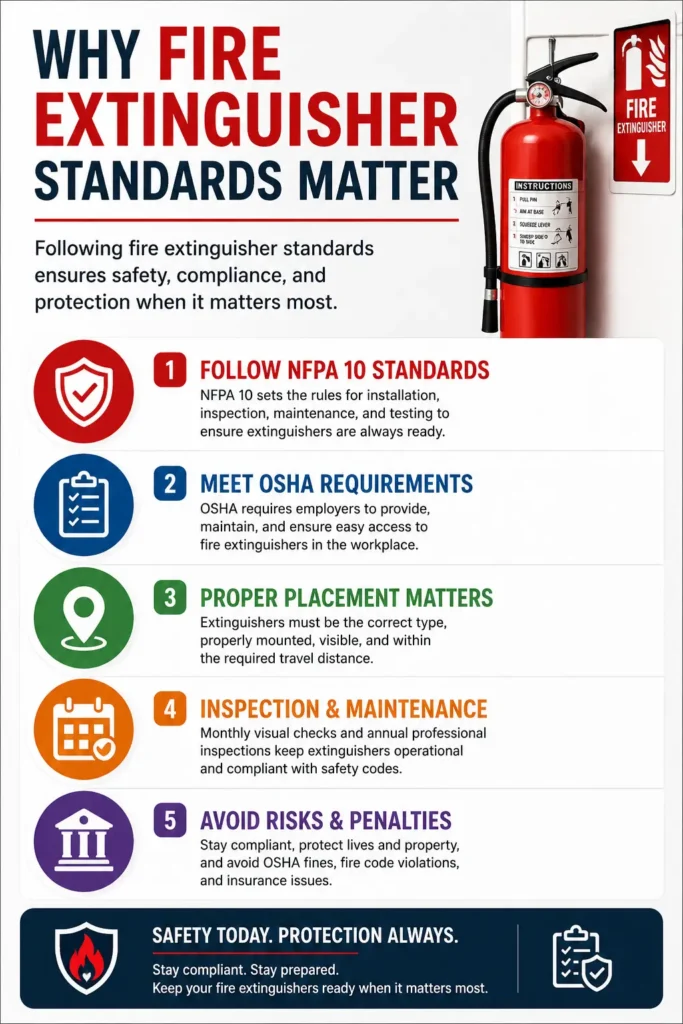
Fire Extinguisher Placement Standards
Standards also define how and where extinguishers must be installed.
Distance Requirements
Typical NFPA guidelines include:
- Class A extinguishers within 75 feet travel distance
- Class B extinguishers within 30–50 feet depending on hazard
- Kitchen extinguishers placed near cooking equipment
Mounting Height
Portable extinguishers must be mounted:
- Maximum 5 feet from the floor if under 40 pounds
- Maximum 3.5 feet from the floor if over 40 pounds
Visibility and Accessibility
Extinguishers must:
- Be clearly visible
- Not be blocked by equipment or furniture
- Have signage when needed
Proper placement ensures extinguishers can be quickly located during emergencies.
Inspection and Maintenance Standards
Fire extinguisher standards require routine inspections to confirm equipment remains operational.
Monthly Inspection
Performed by building staff to verify:
- Extinguisher is accessible
- Pressure gauge is within range
- Safety pin and seal are intact
- No visible damage exists
Annual Inspection
Performed by certified technicians to evaluate:
- Mechanical condition
- Pressure levels
- Internal components
- Compliance documentation
Hydrostatic Testing
Depending on the extinguisher type, hydrostatic testing occurs every:
- 5 years
- 12 years
This testing ensures cylinders remain structurally safe.
Common Fire Code Violations Businesses Make
Many businesses unknowingly violate fire extinguisher standards.
Common violations include:
- Expired inspection tags
- Missing extinguishers
- Blocked equipment access
- Improper mounting height
- Incorrect extinguisher type for hazards
- Lack of maintenance records
Routine inspections help identify these issues before they become safety risks or code violations.
A Simple Plan for Meeting Fire Extinguisher Standards
Staying compliant with fire safety regulations does not need to be complicated.
Step 1: Install the Correct Extinguishers
Ensure your building has the right extinguisher type for each fire hazard.
Step 2: Perform Monthly Checks
Assign staff to perform quick visual inspections.
Step 3: Schedule Annual Maintenance
Have certified technicians perform professional inspections.
Step 4: Keep Compliance Records
Maintain inspection documentation for fire marshal or OSHA audits.
What Happens If Fire Extinguisher Standards Are Ignored?
Ignoring fire extinguisher standards can lead to serious consequences.
Safety Risks
- Equipment failure during emergencies
- Increased fire damage
- Risk to employees and customers
Legal Risks
- OSHA penalties
- Fire marshal violations
- Insurance complications
Routine inspections and maintenance prevent these risks.
Fire Safety Success for Your Business
When fire extinguisher standards are followed correctly, businesses gain:
- Safer workplaces
- Regulatory compliance
- Reduced liability
- Faster emergency response
Maintaining fire safety equipment is one of the most effective ways to protect people, property, and operations.
Employers can verify worker safety training requirements by reviewing OSHA’s official guidance on OSHA training cards.
Schedule Fire Extinguisher Service in Nashville
If your business needs professional help meeting fire safety standards, certified technicians can handle inspections, maintenance, and compliance documentation.
Visit: https://iconfiresafety.com/
Schedule a professional fire extinguisher inspection or service to ensure your equipment meets OSHA and NFPA standards.
FAQ: Fire Extinguisher Standards
What standard governs fire extinguishers?
The main standard is NFPA 10 – Standard for Portable Fire Extinguishers.
Does OSHA require fire extinguishers in workplaces?
Yes. OSHA requires employers to provide and maintain fire extinguishers under 29 CFR 1910.157.
How often must fire extinguishers be inspected?
They must be visually inspected monthly and receive professional maintenance annually.
Who can perform fire extinguisher inspections?
Monthly checks can be done by staff, but annual inspections must be performed by trained fire safety technicians.