Introduction
Fire extinguishers Inspection are a critical part of any fire protection plan. However, simply installing them is not enough. Regular inspection and maintenance are required to ensure they function properly during an emergency.
If you are responsible for workplace safety or property management, understanding inspection frequency is essential for compliance and risk reduction.
This guide explains:
- Required inspection intervals
- Differences between inspection, maintenance, and testing
- Regulatory requirements
- Consequences of non-compliance
Who Needs to Follow These Requirements
Inspection requirements apply to:
- Business owners
- Commercial property managers
- Facility managers
- Landlords of multi-tenant buildings
- Employers are responsible for OSHA compliance
Workplace fire safety is regulated under the Occupational Safety and Health Administration and the National Fire Protection Association, specifically NFPA 10.
Fire Extinguishers Inspection Frequency
Multiple types of Fire extinguishers Inspection are required and testing at different intervals.
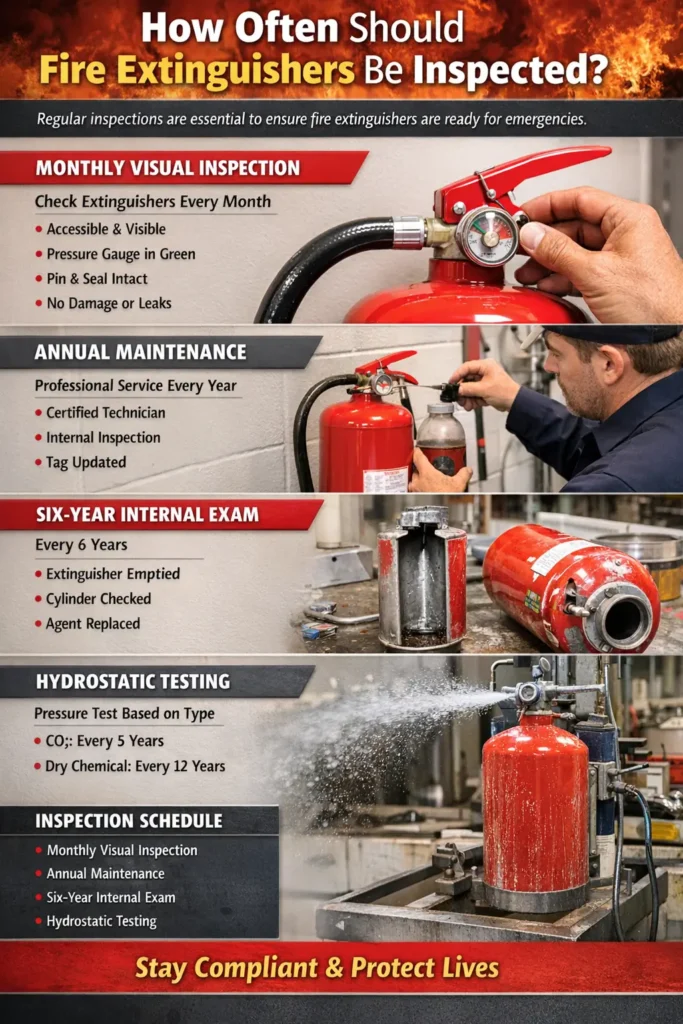
Monthly Visual Inspection
Fire extinguishers must be visually inspected once every month.
This requirement applies to most commercial properties.
The monthly inspection includes checking:
- The extinguisher is visible and accessible
- The pressure gauge is in the operable range
- The safety pin and tamper seal are intact
- There is no visible damage, corrosion, or leakage
- The inspection tag is current
This inspection can be performed by a designated employee. It does not require a licensed technician.
Annual Maintenance Inspection
Fire extinguishers must be professionally serviced once every year.
This inspection must be conducted by a certified fire protection technician.
Annual inspection of Fire Extinguishers typically includes:
- Internal mechanical inspection
- Examination of the extinguishing agent
- Verification of proper pressure
- Replacement of tamper seals if necessary
- Documentation on a service tag
This inspection is more detailed than the monthly visual check.
Six-Year Internal Examination
Stored pressure fire extinguishers, such as most ABC dry chemical units, require an internal examination every six years.
This service includes:
- Emptying the extinguisher
- Inspecting the interior cylinder condition
- Replacing the extinguishing agent if required
- Recharging the unit
This is not required for all extinguisher types, but it applies to the most commonly installed commercial units.
Hydrostatic Testing
Hydrostatic testing ensures the extinguisher cylinder can safely hold pressure.
Testing frequency depends on the extinguisher type:
- Dry chemical extinguishers: Every 12 years
- Carbon dioxide extinguishers: Every 5 years
During hydrostatic testing:
- The extinguisher is emptied
- The cylinder is filled with water
- Pressure is applied to verify structural integrity
If the cylinder fails the test, the extinguisher must be removed from service.
Inspection Schedule Summary
Monthly Visual inspection by designated staff
Annually Professional maintenance by a certified technician
Every 6 Years Internal examination for applicable stored pressure extinguishers
Every 5 to 12 Years Hydrostatic pressure testing depending on extinguisher type
Why Regular Inspection Matters
Skipping inspections creates serious risks.
External Risks
- Failed fire marshal inspections
- OSHA violations
- Insurance compliance issues
- Equipment malfunction during emergencies
Internal Concerns
- Uncertainty about whether the equipment will work
- Increased liability exposure
- Safety risks for employees and occupants
Ethical Responsibility
If fire protection equipment is installed to protect lives and property, it must be maintained to function properly.
Common Inspection Mistakes
Businesses often make these errors:
- Forgetting monthly inspections
- Failing to document inspections
- Ignoring the six-year internal service requirements
- Missing hydrostatic testing deadlines
- Allowing obstructed access to extinguishers
Documentation is critical. Inspection tags must be updated and records maintained for compliance verification.
Who Is Responsible
Responsibility depends on the property structure and lease agreements.
Generally:
- Employers are responsible for workplace compliance
- Property owners maintain common areas
- Tenants may be responsible for leased spaces
When in doubt, confirm responsibilities in writing and ensure compliance standards are met.
Frequently Asked Questions
Can employees perform monthly inspections?
Yes. Monthly visual inspections can be performed by trained staff members.
Is annual service mandatory?
Yes. Annual maintenance of Fire extinguishers by a certified technician is required under NFPA 10 and workplace safety regulations.
Do fire extinguishers expire?
They do not have a simple expiration date, but they must undergo internal examinations and hydrostatic testing based on their type and age.
What happens during a fire marshal inspection?
Inspectors typically verify:
- Accessibility and visibility
- Current inspection tags
- Proper mounting height
- Compliance with applicable codes
Final Takeaway
Fire Extinguishers Inspection should be performed according to this schedule:
- Monthly visual inspection
- Annual professional maintenance
- Six-year internal examination when applicable
- Hydrostatic testing every 5 to 12 years, depending on type
Regular inspection ensures compliance, reduces liability, and most importantly, protects lives and property.
If you are responsible for a building or workplace, maintaining this schedule is not optional. It is a core part of fire safety management.